
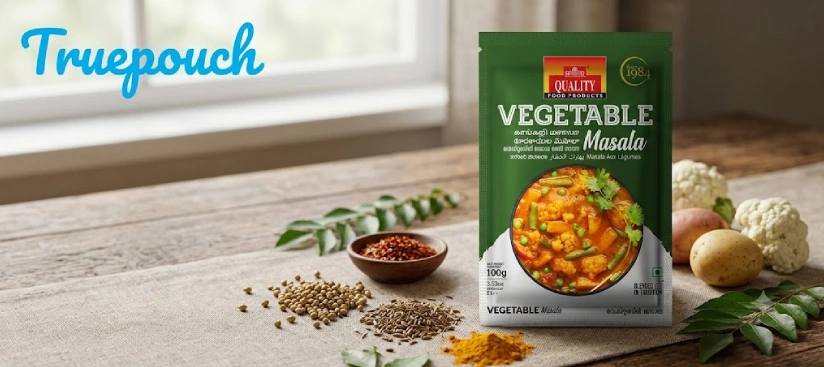
What Is a 3 Side Seal Pouch and Which Products Can It Package?
Choosing the right packaging is an important decision for businesses that want to protect their products, maintain quality, and create a professional brand image. Flexible packaging has become a practical solution for industries ranging from food processing and agriculture to pharmaceuticals, cosmetics, and industrial manufacturing. Among the available packaging formats, the 3 side seal pouch is widely used because of its compact design, convenient sealing structure, and adaptability to different product requirements.
A 3 side seal pouch is a flexible packaging pouch sealed along three edges, leaving one side open for filling before it is sealed. It can be manufactured using different packaging films and laminate structures depending on the product's protection, shelf-life, and storage requirements.
Truepack Flexibles provides flexible packaging solutions for businesses looking for suitable pouch formats for different products and applications. Understanding how a 3 side seal pouch works, which products it can package, and what factors influence its selection can help manufacturers and product owners make informed packaging decisions.
What Is a 3 Side Seal Pouch?
A 3 side seal pouch is a flat, flexible packaging bag that has permanent seals along its left, right, and bottom edges, while the top remains open during the filling process. After the product is placed inside, the open edge is sealed to complete the package.
This packaging format is commonly used for single-use products, small quantities, sample packs, and products that require individual portions. Its flat construction makes it suitable for applications where simple storage, efficient packing, and compact presentation are important.
Unlike stand-up pouches, which typically include a bottom gusset that allows them to stand upright, standard 3 side seal pouches are generally flat and designed to lie flat or be displayed in secondary packaging.
Key Features of a 3 Side Seal Pouch
A 3 side seal pouch offers several features that make it suitable for different packaging applications.
- Three sealed edges: The side and bottom seals help contain the packaged product.
- Flat construction: Its compact shape supports convenient storage, transportation, and handling.
- Flexible material options: Different film and laminate combinations can be selected according to product requirements.
- Customisable dimensions: Width, length, and material thickness can be selected to suit the product quantity and packaging equipment.
- Printing options: Product names, instructions, branding, ingredient details, and other required information can be printed on suitable packaging materials.
- Multiple filling options: Pouches can be filled manually or through compatible packaging machinery.
- Single-use convenience: The format is particularly useful for samples, trial packs, and individual servings.
The exact performance of a pouch depends on its material structure, seal quality, dimensions, and manufacturing specifications.
How Does a 3 Side Seal Pouch Work?
The manufacturing and filling process is relatively straightforward, although the precise production method varies according to the machinery and packaging design.
Step-by-Step Packaging Process
- Film selection: A suitable flexible packaging film or laminate is selected based on the product's characteristics.
- Pouch formation: The material is cut and folded or layered into the required pouch shape.
- Three-side sealing: The left, right, and bottom edges are sealed to form the pouch.
- Product filling: The product is introduced through the open edge using a suitable filling method.
- Final sealing: The remaining open edge is heat-sealed or closed using a compatible sealing process.
- Quality inspection: Finished packs are checked for seal integrity, dimensions, printing quality, and other applicable quality requirements.
For products that are sensitive to moisture, oxygen, light, or contamination, the packaging structure and sealing process should be selected and validated according to the intended application.
Which Products Can a 3 Side Seal Pouch Package?
A 3 side seal pouch can accommodate a wide range of products, provided the pouch material, dimensions, and sealing specifications are appropriate. It is particularly useful for small quantities and products that benefit from individual packaging.
1. Food Products
Food packaging is one of the common applications of 3 side seal pouches. The format can be designed for dry, powdered, granular, and certain liquid or semi-liquid products when the selected materials and seals are suitable.
Examples include:
- Spices and seasoning powders
- Salt and sugar sachets
- Coffee and tea samples
- Instant beverage powders
- Dry fruit and nut portions
- Snack samples
- Sauces and condiments
- Instant food ingredients
- Bakery toppings and food additives
For food applications, manufacturers should consider food-contact compliance, moisture protection, aroma retention, oxygen sensitivity, and the intended shelf life. Liquid products may require specialised film structures and leak-resistant sealing.
2. Pharmaceutical Products
Pharmaceutical packaging requires careful consideration of product protection, hygiene, compatibility, and applicable regulatory requirements. Three-side-sealed pouches can be used for certain unit-dose products and secondary or primary packaging applications, depending on the design.
Potential applications include:
- Selected powder formulations
- Granular products
- Single-use healthcare preparations
- Medical product samples
- Certain non-sterile medical accessories
- Individual components or kits
Not every pharmaceutical or medical product is suitable for this pouch format. Sterile products and moisture-sensitive formulations may require validated barrier materials, specialised manufacturing controls, and regulatory testing.
3. Personal Care and Cosmetic Products
Cosmetic and personal care brands often use small flexible pouches to distribute samples, trial quantities, and single-use portions. This allows customers to test a product before purchasing a full-size pack.
Examples include:
- Shampoo samples
- Hair conditioner samples
- Face wash portions
- Face cream samples
- Body lotion sachets
- Hair mask samples
- Cosmetic formulations
- Selected cleansing gels
The packaging material must be compatible with the formulation. Products containing oils, fragrances, solvents, or other reactive ingredients may require specialised material selection and compatibility testing.
4. Agricultural Products
Agricultural businesses can use 3 side seal pouches for selected small-volume products, samples, and measured quantities. This can be useful when customers need convenient portions rather than large packages.
Potential applications include:
- Seed samples
- Small quantities of planting seeds
- Agricultural nutrient samples
- Selected powdered soil supplements
- Small-volume crop-care products where permitted by the applicable requirements
The packaging must protect the product from relevant environmental conditions. Seeds may need moisture-resistant packaging, while chemical or crop-protection products may require specialised materials, compatibility assessments, and compliant hazard labelling.
5. Industrial and Chemical Products
Some industrial products are packaged in small flexible pouches for controlled distribution, sampling, or individual use. The pouch design must be chosen carefully because chemical compatibility and leakage prevention are essential.
Examples may include:
- Industrial powder samples
- Selected additives
- Pigment samples
- Laboratory material samples
- Small quantities of compatible granules
- Certain non-hazardous processing ingredients
Aggressive chemicals, volatile substances, hazardous materials, and products requiring high mechanical protection should not be assigned to a standard pouch without an appropriate technical assessment.
6. Electronic Components and Small Accessories
Three-side-sealed pouches can also package lightweight components and small accessories when the selected packaging material meets the product's handling and protection requirements.
Examples include:
- Small plastic components
- Fasteners and fittings
- Lightweight hardware samples
- Selected assembly accessories
- Small product kits
Electronic components that are sensitive to static electricity or humidity may require antistatic, static-dissipative, moisture-barrier, or other specialised packaging rather than a standard flexible pouch.
What Materials Are Used to Manufacture 3 Side Seal Pouches?
The material used in a 3 side seal pouch influences its strength, appearance, sealing performance, and ability to protect the packaged product. Material selection should be based on the product's physical and chemical properties rather than appearance alone.
Common Packaging Material Options :
1. Polyethylene (PE)
PE is used in flexible packaging where flexibility, moisture resistance, and heat-sealing performance are important. The appropriate grade and structure depend on the application.
2. Polypropylene (PP)
Polypropylene films can offer clarity, stiffness, and useful packaging performance. The selected grade and seal structure determine suitability for the intended product.
3. Polyester (PET)
PET films are commonly used in laminated packaging because they can provide strength, dimensional stability, and a suitable surface for printing.
4. Aluminium foil laminates
Aluminium foil can provide a strong barrier against light, moisture, and oxygen when incorporated into an appropriate laminate. It is useful for selected products that require enhanced protection.
5. Multilayer laminates
Different materials can be combined to achieve a balance of printability, strength, barrier protection, and sealability. The appropriate construction depends on the product's shelf-life requirements, filling conditions, and storage environment.
The material structure should be finalised after evaluating the product, required barrier properties, sealing conditions, and relevant compliance requirements.
What Are the Advantages of 3 Side Seal Pouches?
Businesses choose this pouch format for several practical reasons.
- Compact storage: Flat pouches can be stored efficiently before filling and are convenient for packaging small products.
- Flexible design: Dimensions and material combinations can be tailored to different product requirements.
- Brand presentation: Custom printing can help businesses communicate product information and maintain consistent branding.
- Portion control: The format supports individual servings, measured quantities, and sample distribution.
- Lightweight packaging: Flexible materials can reduce packaging weight compared with some rigid alternatives.
- Versatile applications: Suitable designs can be developed for food, personal care, agricultural, and selected industrial products.
- Convenient distribution: Individual pouches are useful for promotional samples, trial packs, and small retail quantities.
These advantages depend on the final design. Packaging costs, recyclability, shelf life, and product protection vary according to material selection and manufacturing requirements.
What Is the Difference Between a 3 Side Seal Pouch and Other Pouch Types?
Selecting the right pouch format requires an understanding of how different designs meet different packaging needs.
3 Side Seal Pouch vs. Stand-Up Pouch
A 3 side seal pouch is generally flat and does not stand upright independently. A stand-up pouch usually incorporates a bottom gusset that helps it remain upright on shelves.
A three-side-sealed format is often suitable for samples, sachets, and individual portions, while a stand-up pouch may be more appropriate for products that require shelf visibility, larger capacities, or convenient storage after opening.
3 Side Seal Pouch vs. 4 Side Seal Pouch
A 3 side seal pouch has three edges sealed during pouch formation, with the remaining edge closed after filling. A four-side-sealed pouch has seals along all four edges and can provide an individually sealed, flat package.
The best option depends on the product, required seal arrangement, filling method, and packaging machinery.
3 Side Seal Pouch vs. Centre-Seal Pouch
A centre-seal pouch is commonly formed from a continuous film with a longitudinal seal along the back and transverse seals at the ends. It is frequently used on form-fill-seal packaging equipment for products such as snacks, powders, and other packaged goods.
A three-side-sealed pouch is typically formed as an individual flat pouch with three pre-existing sealed edges. The formats differ in construction, equipment requirements, and production workflow.
How Do You Choose the Right 3 Side Seal Pouch?
Choosing an appropriate pouch involves more than selecting a size or design. Businesses should evaluate the product's properties, distribution conditions, and packaging objectives.
Consider the following factors:
- Product type: Determine whether the product is a powder, granule, solid item, liquid, or semi-liquid formulation.
- Required capacity: Establish the quantity that each pouch must hold.
- Barrier requirements: Assess the need for protection against moisture, oxygen, light, odours, or other environmental factors.
- Material compatibility: Confirm that the packaging material is suitable for contact with the product.
- Seal strength: Select a seal design and process that can withstand the expected handling and distribution conditions.
- Printing requirements: Plan space for branding, instructions, ingredients, batch details, and legally required information.
- Filling method: Check whether the pouch will be filled manually or using automated equipment.
- Storage and transportation: Consider temperature, humidity, stacking, shipping distance, and handling conditions.
- Regulatory compliance: Identify applicable food-contact, pharmaceutical, chemical, labelling, and other product-specific requirements.
- Cost and sustainability: Compare material use, production efficiency, end-of-life options, and the total packaging cost.
Discussing these requirements with a flexible packaging manufacturer can help identify a pouch structure that balances product protection, presentation, and production efficiency.
Why Choose Truepack Flexibles for 3 Side Seal Pouch Packaging?
Businesses need packaging that aligns with their product specifications, operational requirements, and brand identity. Truepack Flexibles can be approached for flexible packaging solutions suited to different product categories and packaging objectives.
When evaluating a packaging supplier, businesses should look for the ability to discuss material selection, pouch dimensions, printing requirements, sealing performance, and the intended product application.
Important considerations include:
- Pouch sizes suited to the required product quantity
- Material structures selected for the necessary protection
- Printing options for brand identity and product information
- Packaging specifications aligned with filling and sealing equipment
- Quality checks appropriate to the intended application
- Support in identifying packaging requirements for different industries
Before finalising an order, businesses should confirm available pouch specifications, material options, minimum order quantities, production lead times, and applicable compliance documentation directly with Truepack Flexibles.
Frequently Asked Questions About 3 Side Seal Pouches
1. What is a 3 side seal pouch used for?
A 3 side seal pouch is used to package individual portions, samples, small quantities, and selected retail products. Common applications include food ingredients, seasoning sachets, cosmetic samples, agricultural samples, and certain industrial materials.
2. Can a 3 side seal pouch hold liquid products?
Yes, certain liquid and semi-liquid products can be packaged in three-side-sealed pouches. However, the pouch requires a suitable material structure and reliable seals to minimise leakage. Compatibility and seal testing are recommended before commercial production.
3. Are 3 side seal pouches suitable for food packaging?
Yes, they can be suitable for food products when the packaging materials meet applicable food-contact requirements. The structure should also provide the required protection against moisture, oxygen, light, and other factors affecting food quality.
4. Can 3 side seal pouches be customised?
Yes, suitable pouch designs can be customised by dimensions, material structure, thickness, and printing. Available options depend on the manufacturer's capabilities and the intended application.
5. Are 3 side seal pouches suitable for powders?
Yes, powders such as spices, seasoning mixes, beverage powders, and selected industrial materials can be packaged in this format. The design should account for powder flow, dust generation, filling accuracy, and the required barrier properties.
6. What is the difference between a 3 side seal pouch and a sachet?
A sachet is a general term for a small packet containing an individual portion or quantity of a product. A three-side-sealed pouch is a particular packaging construction that can be used to manufacture sachets. The terms may overlap depending on the product and industry.
7. Can 3 side seal pouches be printed with a company logo?
Yes, custom printing can display a company logo, product name, brand colours, usage instructions, and other relevant details. The available printing method and finish depend on the material structure and supplier capabilities.
8. Are 3 side seal pouches cost-effective?
They can be cost-effective for small portions and products requiring lightweight, compact packaging. The overall cost depends on the materials, pouch size, print requirements, order quantity, production process, and quality specifications.
9. Can 3 side seal pouches protect products from moisture?
Yes, if the pouch is manufactured using a suitable moisture-barrier material and properly sealed. The level of protection varies by material structure, seal quality, storage conditions, and the product's sensitivity to humidity.
10. How can I select a suitable 3 side seal pouch manufacturer?
Look for a manufacturer that can discuss your product requirements, recommend appropriate materials, clarify customisation options, and provide relevant quality and compliance information. Businesses can contact Truepack Flexibles to discuss their flexible packaging requirements and confirm the available solutions.
